about the breed
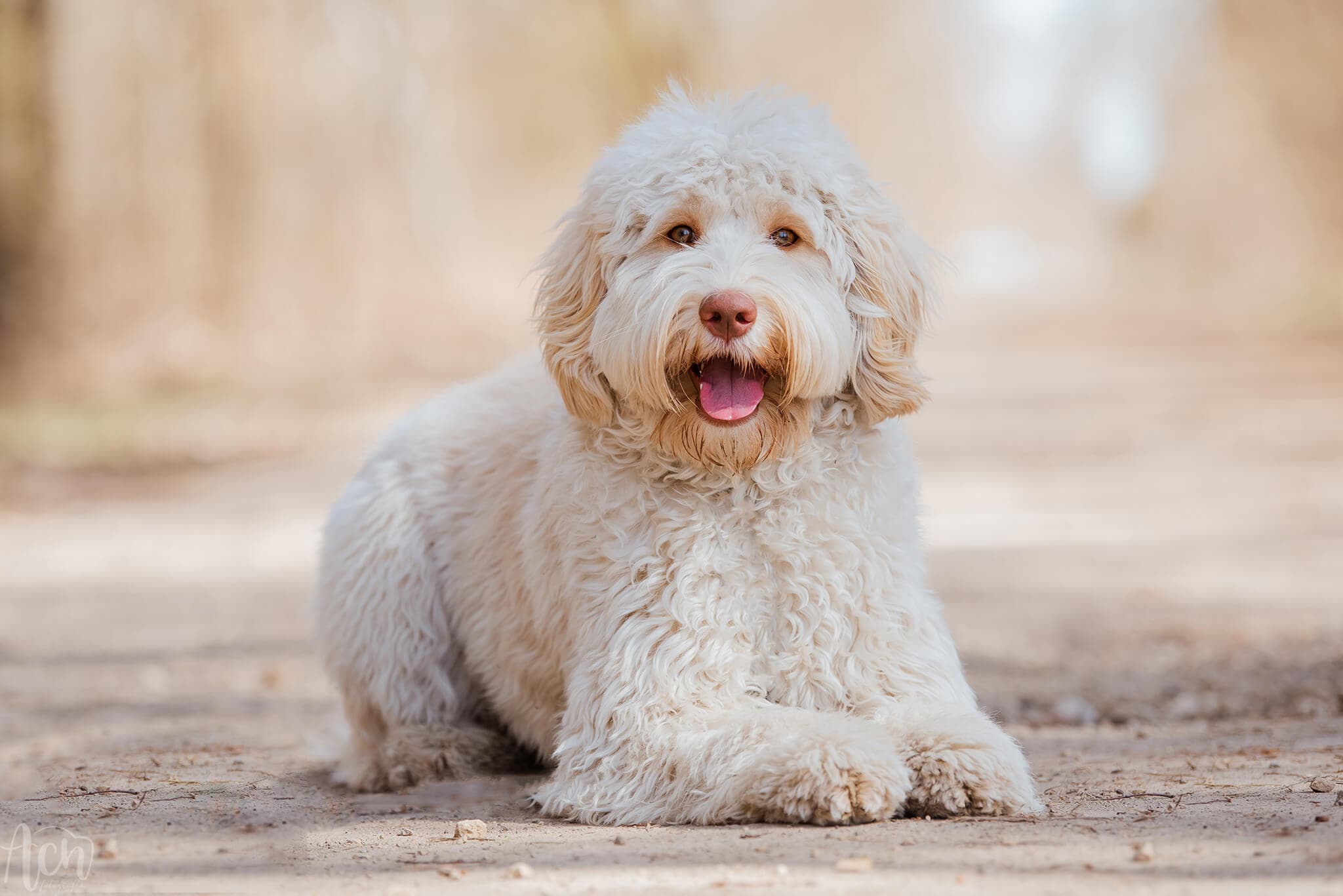
Australian Labradoodles — Breed History
The history of Australian Labradoodles begins with working dogs, the needs of people with allergies and a deliberate breeding program developed by the breed's Australian pioneers.
Dogs in the service of people
Through selective breeding and training, people have learned to develop dogs for specific roles. Alongside traditional tasks such as herding, hunting, tracking and guarding, the past century has brought other kinds of work for dogs.
Today, dogs guide people, support therapy, search for missing persons and detect drugs or explosives.
Authentic Australian Labradoodles comprise two lines: a working line and a therapy line. They have been used successfully in the specialized roles mentioned above for many years.
Combining the Poodle's intelligence with the Labrador's working qualities
The Australian Labradoodle began as a Labrador Retriever–Poodle hybrid. Over subsequent decades, however, other breeds were introduced for specific purposes.
In the 1970s, the Australian Blind Organization began experimenting with combining the Poodle's intelligence and the Labrador Retriever's strong focus on people. Some dogs from these crosses were easy to train, did not shed and lacked the typical dog odor.
At first, these positive qualities received little attention. Then, in 1989, the institute received a request for a guide dog for a blind woman. The dog also had to avoid triggering an allergic reaction in her husband.
Wally Conron, the breeder responsible at The Royal Victorian Guide Dogs Association, remembered this combination and decided to try it again. The first litter contained three puppies, not all of whom had the desired qualities.
The Labradoodle name and the first lessons
Conron named the offspring LABRADOODLES. After extensive testing, only one puppy proved allergy-friendly, although that dog still shed.
The success was reported enthusiastically in the Australian media. Media interest in the Labradoodle's special qualities suddenly made these dogs very popular.
Wally Conron repeated the cross several times. In an interview with Reader's Digest, however, he said that many Labradoodles had difficult, stubborn temperaments. After several attempts, he decided to end the breeding program.
Beverley Manners, Angela and the breeding program
Publicity surrounding the cross made Labradoodles popular in Australia and the United States. It also inspired two Australian breeders, Beverley Manners and her daughter Angela, to continue the work Conron had begun.
They wanted to develop a dog without aggression, with allergy-friendly qualities, a desire to work and a temperament suited to training as a working or therapy dog.
Both breeders bought their first Labradoodles from a farmer named Don Evans, who had already bred several generations. These Labradoodles, along with other F1 Poodle infusions, became the foundation of their breeding program.
To broaden the gene pool, they created additional foundation Labradoodle stock by introducing Miniature Poodles into existing Australian breeding lines. This produced smaller Labradoodles.
Shaping temperament and coat
Despite selective breeding from the best offspring, hyperactive and stubborn tendencies persisted. Mother and daughter decided that introducing another breed was necessary to soften the temperament.
The Irish Water Spaniel joined the gene pool, followed by English and American Cocker Spaniels.
Unfortunately, short-coated puppies began appearing in many litters, and these dogs did not look like Labradoodles at all.
The RSPO2 mutation and the Australian Labradoodle name
In July 2012, Cymbrogi, a Dutch Australian Labradoodle breeder, and Edyta Gajewska of Włochata Pasja identified a mutation in the RSPO2 gene as the cause of the unusual coat type.
Breeders in Australia, the United States, the United Kingdom and other countries began following the successful program developed by the Australian pioneers.
To distinguish their unique dogs from other Labradoodles, Beverley Manners and her daughter named their lines Australian Labradoodles, and later ASD Australian Labradoodles. ASD stands for Australian Service Dog.
The last infusion was the Soft Coated Irish Wheaten, introduced in 2004 to improve coat texture. Coats incorporating this final infusion are easier to maintain.
Source:
History of the Breed — ALFA-Europe (https://www.alfa-europe.org/puppy-buyer/breed-history.html)
Continue exploring
Temperament — Personality, needs and everyday life with an Australian Labradoodle.
Health Testing — Health examinations, genetics and responsibility within the breeding program.
Puppy Socialization — How we prepare puppies for life with a family.