Socialization
Puppy Class
A First Step toward Confidence — or Lasting Trauma?
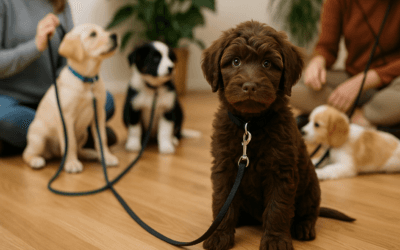
Imagine a child going to preschool for the first time: excited, but a little lost, looking to adults for support, a safe atmosphere and friendly classmates. Now imagine that child is a puppy — your puppy.
Puppy class is more than fun and the socialization promised in advertising brochures. It can be one of the most important experiences in a young dog's life, yet it is often underestimated and poorly managed. An unsuitable group, misunderstood emotions and too much stimulation can plant fears that last for years.
I will not sugarcoat it. I want to show you what a good puppy class looks like, what can go wrong, the consequences, and most importantly, how to help if something has already gone wrong. Your dog's welfare is not an abstract theory: it is part of everyday life. You have the right to expect that the people you entrust with your dog will not cause harm.
Puppy Classes — The Idea and the Potential
Puppy class can be one of the most important experiences in a young dog's life, and one that caregivers often underestimate. A puppy encounters social life, learning to be around other dogs, people, new experiences and unfamiliar situations. In theory, it sounds wonderful. In practice, results vary.
A well-run class offers enormous potential: controlled socialization, basic skills, emotional development and a stronger relationship with the caregiver. It sounds excellent, and it can be — if the instructor has knowledge, empathy and an understanding that every dog is different.
The Dark Side of Puppy Classes
It sounds like a nightmare: you arrive hoping your puppy will learn about life and leave with a dog terrified of other dogs, people, sounds or even the leash. Unfortunately, this is not rare. It can result from irresponsibly managed classes.
Problems begin with the assumption that dogs will work things out among themselves. They do not always do so. Dogs are not magical creatures born with complete social skills. They learn, and that learning can be constructive or destructive.
Poorly run classes often involve:
No consideration of temperament. A sensitive puppy shares a group with a highly excitable, boisterous puppy. The sensitive one withdraws and learns that other dogs mean stress and unpredictability; the excitable one is reinforced for that behavior because nobody teaches settling.
A chaotic environment. A loud hall, slippery floor, many smells and other stimuli, no quiet retreat, and sessions without a plan or structure. Instead of learning, puppies struggle to cope with a sensory tsunami.
No intervention from instructors. Someone watches puppies play without noticing that one is frozen in a corner, another is signaling stress and a third keeps crossing boundaries unchecked. Sometimes the behavior is misread: 'Look how nicely they are communicating,' while one puppy lies belly-up, repeatedly pinned by another. That is not healthy communication; it is a recipe for a socialization disaster.
Ignoring stress signals. Body language is fundamental to working with puppies. If an instructor misses lip licking, yawning, freezing, head turning or avoidance, they do not understand what they are seeing — and that becomes dangerous.
Excessive intensity and duration. An hour without breaks, packed with exercises and constant stimulation, is a marathon for a puppy's brain. Instead of learning, the puppy becomes exhausted and frustrated and loses the ability to concentrate.
The result? A puppy who should learn social skills learns that dogs are threatening. A puppy who should gain confidence develops fears. A few weeks later, the caregiver may need a behavior professional, not for a fun activity but to rebuild damaged trust and address behavior problems.
This needs saying clearly: puppy class is not simply a chance to pet puppies. It is a serious educational undertaking requiring knowledge, empathy and responsibility. Neglect can have real consequences for a young dog's emotional well-being.
Warning Signs — When Is a Class Not Helping Your Puppy?
Not every session needs to be perfect, but any of these signs is a red flag:
Your puppy does not want to enter the room, withdraws, hides or freezes.
After class, your puppy is excessively excited or exhausted — not pleasantly tired, but mentally drained.
New behaviors appear: growling, avoiding contact, nervous lip licking or attempts to escape.
The trainer dismisses your questions, cannot explain the session or shows little interest in your dog's emotional state. They cannot find solutions, or suggest approaches that do not help.
Puppies learn quickly, including undesirable lessons. Negative experiences with dogs, people or surroundings can cause problems that persist for years. Remember that you may leave a session if you notice an unwelcome change in your puppy. That is better than trying to undo the damage later.
What Should Concern You about a Class?
Before enrolling or deciding to continue, consider these key questions:
Are the puppies similar in age and temperament?
Can the dogs rest?
Does the trainer respond when a puppy is clearly stressed or overwhelmed?
Are sessions focused on showing off tricks or on the puppy's emotional safety?
Are puppies let off leash to run around together during breaks? This can lead to small physical injuries and emotional harm.
All of this matters. The aim is not to exhaust a puppy through play with other dogs. It is to help the puppy understand canine communication and feel safe and comfortable in a new environment.
What Can Happen When Things Go Wrong?
The consequences of an unsuitable class can be serious. A sensitive puppy exposed to stress, force — even seemingly mild behavior from another puppy can be traumatic — or excessive stimulation may begin to:
Avoid dogs or people;
Become reactive, for example barking or lunging at dogs on walks;
Experience intense stress in new situations;
Struggle with concentration, settling or cooperation.
Some puppies learn that the world is unpredictable and dangerous. It is like sending a person with social anxiety to a techno party and telling them to relax.
How Do You Recognize a Good Puppy Class?
A good class is like a well-run nursery: empathetic, competent and safely structured. Before enrolling, look for the following:
Small groups and individual attention. Ideally, no more than four to six puppies, allowing the instructor time and space to get to know and support each one. One instructor for ten puppies? Walk away.
Thoughtful selection. A professional class does not accept everyone without assessment. It begins with a consultation considering temperament, play style and responses to stimulation. Taking every puppy without questions is a bad sign.
Attention to body language. Instructors should continuously read the dogs' signals. Is anyone withdrawing? Is one puppy overwhelming others? Are conflicts arising, and how quickly and effectively are they addressed?
Structured sessions. A good class is not simply play with dogs. Sessions should balance socialization, training, settling, rest, focus and the relationship with the caregiver.
Physical and emotional safety. The setting should be clean, secure and quiet or appropriately sound-controlled. Dogs should be separable, calm spaces available and sessions interruptible when necessary.
Respect for the puppy's needs. A good instructor never forces interaction before a puppy is ready. A dog has the right to say no, and that refusal should be respected.
Competent staff. Find out who runs the class. Do they have education in animal behavior, zoopsychology or positive training? Do they keep learning and use current knowledge rather than doing something simply because they always have?
Partnership with the caregiver. Class is not daycare. A good instructor explains the purpose of exercises and the meaning of your dog's behavior, gives you work to practice at home and welcomes questions.
Remember that you may ask questions, request to observe a class or leave after the first session if something worries you. Your dog cannot explain in words that something is wrong, but you can notice and respond.
How Can You Repair the Effects of a Poor Class?
If something goes wrong, do not despair. It is difficult to see a puppy who recently wagged happily now hiding from another dog. But this is not the end. Dogs can adapt, emotional wounds can heal and trust can be rebuilt with a thoughtful, compassionate approach.
First, stop. Do not keep taking your dog to frightening classes or forcing stressful interactions. Provide space. Safety comes first.
Find a good behavior professional, ideally someone experienced with fearful dogs, positive methods and canine emotional needs. You need someone who rebuilds safety, not someone who pushes your dog through more distress.
Begin with the relationship. Create small daily experiences in which your dog feels comfortable: shared walks, play at home and simple cues in a safe setting. Show your dog that you are a secure base.
Socialize slowly and under control. Set aside play with other dogs for now. Begin by watching one calm dog at a distance. Later, introduce a carefully chosen, balanced companion. Take small steps without pressure.
Support emotional well-being through understanding calming signals, settling exercises, scent games and confidence-building. Think therapy rather than drilling, acceptance rather than demands.
Be patient. This cannot be rushed. It may take weeks or months. Every step forward, however small, is a success worth recognizing.
A dog is not a command-following machine, but a being who feels, experiences and remembers. If something has caused harm, helping the dog regain balance is our responsibility — with care, attention and love.
If puppy class does not suit your dog, or you simply want to consider other options, there are alternatives that may be equally effective or better, depending on temperament and your goals:
1. Private Sessions with a Behavior Professional
For a particularly sensitive puppy or one who struggles around other dogs, individual sessions with an experienced behavior professional can be excellent. The specialist can adapt pace and methods to the puppy's needs and help address difficulties arising from negative encounters.
2. Meetings with a Carefully Chosen Companion Dog
Instead of a group class, arrange meetings with a well-matched, balanced dog who can act as a mentor. That companion should be appropriately socialized, calm, patient and comfortable around younger dogs.
3. Individual Attention in Very Small Groups
If you would like something more social than private sessions without overwhelming your puppy, consider a very small group. Puppies can meet a few other dogs while the trainer focuses on individual needs, often creating a more controlled, less stressful environment.
4. Social Walks with Other Dogs
If your puppy enjoys other dogs but a conventional class feels unsuitable, consider social walks in a less formal yet controlled setting under an experienced handler. I mean parallel walks: meeting a calm, emotionally stable dog, both on leash, and sniffing together. I too often see messages such as 'Thirteen-week-old Labradoodle girl looking for puppies to play with.' That can lead to small injuries and unsafe social experiences. Socialization is about safety, not immersing a puppy in uncontrolled stimulation.
5. Scent-Tracking Games
Scent work is another alternative. It develops tracking skills while supporting focus, cooperation and responsiveness to the caregiver. It can be enjoyable and engaging on physical and emotional levels.
A Final Word about Puppy Classes
Puppy classes are more than a trend. They offer a tremendous opportunity when run wisely: early friendships, trust in the world and foundations for later life. That requires attention, knowledge and respect for the dog as a feeling being.
Before enrolling, look around, speak to the instructor and observe a session. Trust your instincts. If something worries you, you have the right to leave.
Your aim is not simply to complete a few classes. It is to raise a dog who feels safe, trusts others and knows that the world, although sometimes challenging, need not be frightening.
A good puppy class can be the first step on that wonderful journey.
Written by Edyta Gajewska. Copying, modifying or distributing these materials, in whole or in part, without the author's permission is prohibited.