Health
Dog Insurance
Is It Worth It?
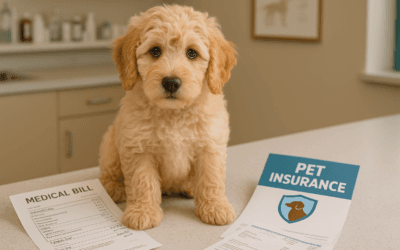
Why Consider Insurance for Your Dog?
As an Australian Labradoodle breeder, I see every day the responsibility future owners take on when welcoming a new family member. A puppy brings joy, energy and many happy moments, but also a major responsibility, not just for upbringing but for health. Any dog, regardless of breed, can face unexpected health problems at any time. In those situations, insurance can be invaluable. Here I would like to explain why a policy may be worthwhile and the benefits it can offer.
1. What Is Dog Insurance, and How Does It Work?
Dog insurance helps cover veterinary costs arising from illness, accidents, surgery and other unexpected health situations. Depending on the plan, it may include accident treatment, hospitalization, veterinary visits and surgery, such as removing a swallowed object or treating serious disease.
Insurance may also include liability coverage if your dog injures someone or damages their property, such as harming another dog or breaking an item. Good coverage offers peace of mind and can help ensure that treatment decisions are not driven solely by finances.
2. Poisoning and the Cost of Treatment
Poisoning is one of the common dangers dog owners face. Dogs, especially young ones, may swallow almost anything they find on the ground, including food scraps, poisons and hazardous chemicals. Eating something toxic requires immediate veterinary help and, in many cases, hospitalization.
Treatment costs can range from several hundred złoty for care at a veterinary clinic to tens of thousands — seriously — when hospitalization, intravenous treatment, extensive testing or blood transfusions are needed. A seriously poisoned dog may need several days in hospital, creating substantial costs. Insurance may cover these expenses, allowing you to focus on helping your dog rather than worrying about the bill.
3. Surgery after a Puppy Swallows Something Inappropriate
Curious puppies put almost anything they encounter into their mouths. During play at home or on a walk, they may swallow plastic, a stick, a hair tie or even metal. Swallowed foreign objects are a common reason for surgery in dogs.
Removing a foreign object from the digestive tract can cost PLN 2,000–5,000, depending on complexity. If postoperative hospitalization is needed, the total may exceed PLN 6,000. Young dogs who have not learned the consequences of their actions are particularly at risk.
The risk is greater in retrievers, who naturally work with their mouths.
Recently I have heard reports of dogs eating sausages containing poison or glass, mouse poison and even Roundup. Some dangers are simply impossible to predict.
4. Orthopedic Conditions and Injuries
Dog insurance also helps with the associated costs. Orthopedic surgery is among the biggest expenses. Can you be certain your dog will not tear a ligament during energetic play with other dogs? And do you know that your choices can influence the development of hip and elbow dysplasia?
A good breeder screens dogs for hip dysplasia, pairs only those with the best results and provides guidance on upbringing, diet and activity. Unfortunately, that is where the breeder's direct role and responsibility end.
Owners have much more to do: reducing slippery flooring — often the hardest part in practice — providing age-appropriate amounts and types of exercise, balancing the diet because both mineral deficiencies and excesses can cause harm, limiting rough play, especially with dogs of different sizes or energy levels, managing stairs and avoiding long walks, particularly repetitive movement.
Treatment can be very expensive, especially when ongoing veterinary care, medication, special diets or rehabilitation are required. Joint problems may need not only pain relief but also rehabilitation and surgery. Chronic conditions can cost tens of thousands of złoty to treat, particularly when surgery is involved.
5. Just Major Problems, or Smaller Ones Too?
6. Why Can Dog Insurance Be a Good Investment?
Many owners do not initially consider insuring their dog. It is worth recognizing that a policy can be more than another expense: it is an investment in your dog's safety. Treatment can cost a great deal, especially in emergencies, and an appropriate policy can save money and stress at a difficult time.
With insurance, you need not worry in the same way about unexpected treatment, surgery, specialist appointments or rehabilitation costs. Many policies also include liability support, which may be useful if your dog harms someone else.
7. How Do You Choose the Right Dog Insurance?
Choosing a policy may seem difficult, but a few key criteria can help:
Scope of coverage — check that the policy includes important areas such as accidents, surgery and chronic illness.
Coverage limits — insurers have different payout limits. They need to be high enough to cover treatment costs.
Waiting period — the time between taking out the policy and coverage beginning. Look for as short a period as possible.
Insuring a dog is a decision about the dog's future. Investing in health, welfare and safety can spare you difficult experiences and unnecessary expense. Peace of mind is invaluable when your companion needs a veterinarian. I encourage you to consider this carefully and make a choice that supports many healthy years together.
I have investigated insurers because I want future families to receive good service, understand what they are paying for and be treated fairly, without an insurer searching for owner mistakes as a reason to exclude a claim. Currently, Generali is one of the better options and acts remarkably quickly. I encourage you to visit bezpieczny.pl and compare the options yourself. As a breeder, we have an agreement with them, and you may use our discount code for savings of up to 20%: 71476. Other options may appear in future, and we will keep informed, but at present I consider them unmatched. Remember that a puppy should be insured before four months of age. After that, additional examinations are required to demonstrate that the dog is healthy. These bring extra costs and may be more invasive: some examinations, such as X-rays, require premedication or sedation. Do we really want to put a young puppy through that unnecessarily?
If you have questions about dog insurance or need guidance, please contact me. I am always happy to help.
Written by Edyta Gajewska. Copying, modifying or distributing these materials, in whole or in part, without the author's permission is prohibited.