
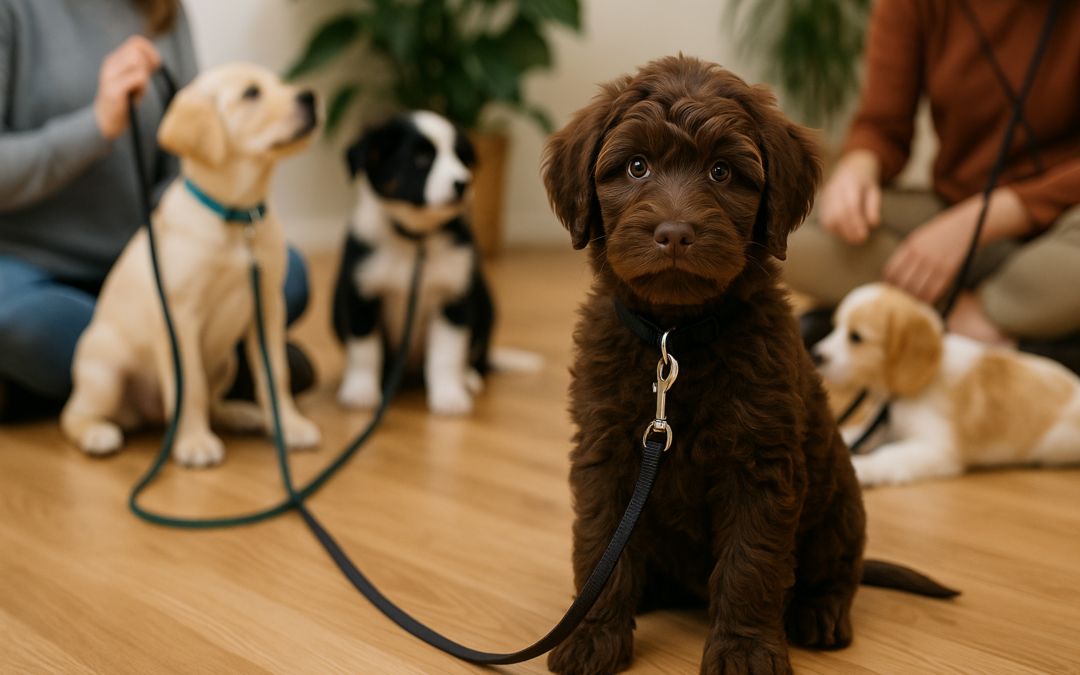
 Dog kindergarten – the first step towards self-confidence or… a lifelong trauma?

Imagine a toddler going to kindergarten for the first time. He is excited but also a bit lost. He counts on the support of adults, a safe atmosphere and friendly friends. Now replace this toddler with a puppy – yours.
Dog kindergarten is not only great fun and "socialization", as the advertising brochures like to call it. It is one of the most important moments in a dog's life - and at the same time one of the most underestimated and poorly run "attractions" for young dogs. A poorly selected group, lack of understanding of emotions, overstimulation... and you can immediately sow fear in the dog's head, which will haunt him for years.
I won't beat around the bush. I'll show you what it looks like good dog kindergarten, but also what can go wrong, what are the consequences and – most importantly – how you can save the situation if something goes wrong. Because the well-being of a dog is not a theory. It is your everyday life. And you have the right to expect that the people you entrust your dog to will not harm him.
Dog kindergarten – idea and potential
Dog kindergarten is one of the most important moments in a young dog's life - and at the same time one of the most often downplayed by caregivers. This is where the puppy first comes into contact with "social life", learns how to function among other dogs, people, new stimuli and situations. In theory - it sounds like a wonderful thing. In practice? It can be different.
A well-organized dog kindergarten has huge potential: socialization in a controlled way, learning basic skills, working on emotions, strengthening the relationship with the caregiver. It sounds great - and it can be. But only if the leader has knowledge, empathy and awareness that every dog is different.
The Dark Side of Dog Kindergartens
It sounds like a bad dream: you go in with the hope that your puppy will learn about life, and you leave with a dog that is terrified of other quadrupeds, people, sounds, and even... the leash. Unfortunately - this is not uncommon, but the effect of irresponsibly run dog kindergartens.
The problem begins with the mistaken assumption that “dogs will figure it out on their own.” No, they don’t. Dogs aren’t magical creatures with innate social skills—they learn them, and the way they do it can be either constructive or destructive.
A poorly run kindergarten often results in:
-
No selection of temperaments. A sensitive toddler ends up in the same group as a hyperactive, expressive savage. The result? The sensitive one shuts down, learns that contact with dogs means stress and unpredictability. The hyperactive one, on the other hand, gets his expression strengthened – because he can, because no one teaches him to calm down.
-
Chaotic environment. Noisy hall, slippery floor, lots of smells, stimuli, no places to quiet down. Classes conducted without a plan or structure. Dogs, instead of learning, fight to survive in a sensory tsunami.
-
Lack of intervention from leaders. The trainer stands by and watches the puppies “play”, not noticing that one dog is freezing in the corner, another is showing stressed signals, and the third is already jumping over the boundaries because no one is stopping him. Unfortunately, these behaviors are often misinterpreted by the trainer – “look how nicely they communicate with each other” (one is constantly belly up, crushed by the other) – I don’t think that’s communication, it’s a recipe for a socialization tragedy.
-
Ignoring stress signals. A dog's body language is essential when working with a puppy. If the handler doesn't see that the dog is licking its lips, yawning, freezing, turning its head away, avoiding contact - it means that the dog doesn't know what it's doing. And that's already dangerous.
-
Too much intensity and duration. An hour-long session with no breaks, lots of exercises and constant stimulation is a marathon for the puppy's brain. Instead of learning, we get fatigue, frustration and loss of concentration.
The result of such a "kindergarten"? A dog that was supposed to learn social skills only learns that other dogs are a threat. A dog that was supposed to gain self-confidence begins to show fears. Often, after a few weeks, the owner returns to the behaviorist - only not for play, but for help rebuilding damaged trust and therapy for behavioral problems.
And this is the moment when it must be clearly stated: dog kindergarten is not a game of petting dogs. It is a serious educational undertaking that requires knowledge, empathy and responsibility. Any neglect can have real consequences for the psyche of a young dog.
Warning Signals – When Is Dog Kindergarten Not Good for Your Dog?
Not every class has to be perfect, but if you notice any of the following signs, it’s a red flag:
-
Your dog does not want to enter the room, he starts to withdraw, hide, and "freeze" in place.
-
After class he is either overstimulated or exhausted – not “healthily tired”, but downright mentally exhausted.
-
Behaviors appear that were not there before: growling, avoiding contact, nervous licking, running away.
-
The trainer ignores your questions, is unable to explain the course of the training, is not interested in the dog's emotional state. Is unable to find solutions, or finds incorrect ones that do not help your dog at all.
Puppies learn quickly. And unfortunately – bad things too. Negative experiences from other dogs, people or the environment can result in problems that will drag on for years. Remember, you can always quit during the course if you see a negative change in your puppy – it's better than having to dig yourself out of problems later.
What should worry you about your classes?
Before you sign your dog up for classes – or decide to continue – here are a few key things to keep in mind:
-
Is the group homogeneous in age and temperament?
-
Do dogs have the opportunity to rest?
-
Does the trainer respond when one of the dogs becomes visibly stressed or overwhelmed?
-
Is the class more of a “trick show” or is it focused on the puppy’s emotional safety?
-
Are puppies let off the leash during a break to romp together? This often results in physical and psychological micro-injuries.
All of this matters. Contrary to appearances, it is not about the dog "having fun" with other dogs. It is about learning their language, so that it feels comfortable and safe in a new environment.
What can happen if something goes wrong?
The effects of a poorly chosen preschool can be very serious indeed. A sensitive puppy who has experienced stress, violence (yes, even "mild" violence from another puppy can be traumatic), too much stimulation – may start to:
-
Avoid contact with dogs or people
-
Become reactive (e.g. barking or lunging at other dogs on a walk)
-
Experience severe stress in new situations
-
Have trouble concentrating, calming down, cooperating
What’s more, some dogs learn in kindergarten that “the world is unpredictable and dangerous.” It’s like throwing a person with social anxiety into a techno party and telling them to “chill out!”
How to recognize a good dog kindergarten?
A well-run doggy daycare is like a well-run nursery – full of empathy, competence and a safe structure. Here are some things to look for before you sign your dog up:
-
Small groups, big attention. Ideally, a group should have a maximum of 4-6 dogs, and the trainer has the time and space to get to know and support each participant. One trainer for 10 pups? Run away.
-
Selection of participants. A professional kindergarten does not accept "off the bat". First, an initial consultation is conducted, the dog's temperament, play style, and reactions to stimuli are assessed. If someone signs up everyone without asking – that's a bad sign.
-
Observing body language. Trainers should constantly analyze the signals sent by the dogs: is one withdrawing? Is one imposing on the others? Are there conflicts? And how quickly and effectively are they resolved?
-
Structure of classes. A good kindergarten is not about "playing with other dogs". The activities should be well thought out: a socialization part, a training part, moments for quiet and rest, work on concentration and the relationship with the caregiver.
-
Physical and emotional safety. The place should be clean, well secured, quiet or suitably soundproofed. It should be possible to separate dogs, create a quiet space, and if necessary – interrupt the activities.
-
Respect for the dog's needs. A good preschool does not force a puppy into contact, does not force it to interact when it is not ready. A dog has the right to say "no" - and this "no" should be respected.
-
Competent staff. Check who is running the classes. Does the person have a degree in behavioral science, animal psychology, positive training? Are they constantly training? Are they working in accordance with current knowledge and not "because that's how they've always done it"?
-
Cooperation with a supervisor. Kindergarten is not a storage facility. A good instructor explains why a particular exercise is there, what your dog’s behavior means, gives you homework and is open to questions.
Remember: you have the right to ask, to ask to observe the class, and even… to resign after the first class if something worries you. Your dog won’t tell you that something is wrong – but you can notice it and react.
How to repair the damage of bad dog daycare?
When something goes wrong, don't give up. Yes, it's hard. You look at a dog that was wagging its tail happily not long ago, and now hides in the corner at the sight of another dog. But it's not the end of the world. A dog's psyche is malleable. It can be treated, trust can be rebuilt - you just have to act with your head and heart.
-
First step: stop. Don't drag your dog further into activities that scare him. Don't force him into contacts that cause stress. Give him space. Safety first.
-
Look for a good behaviorist. It is best to choose someone who specializes in working with anxious dogs, works with positive methods, and understands the emotional needs of the dog. This cannot be someone who will "crawl" your dog - it must be someone who will rebuild a sense of security in him.
-
Start with relationships. Build micro-situations every day in which the dog feels good: walks together, playing at home, teaching simple commands in a safe environment. Show the dog that you are his safe base.
-
Slow, controlled socialization. Forget about “playing with other dogs” for a moment. Start by observing from a distance. One calm dog on the horizon. Then – contact with a well-matched, balanced dog. Small steps, no pressure.
-
Working with emotions. Learning calming signals, calming exercises, olfactory games, working on self-confidence. Instead of training – therapy. Instead of expectations – acceptance.
-
Patience. Seriously, there's no way to speed this up. It can take weeks, sometimes months. But every step forward—even the smallest—is a success. And it's worth celebrating.
Because a dog is not a machine that executes commands. It is a creature that feels, experiences, remembers. If something has hurt it – it is our task to help it get back to balance. With care, with attention, with love.
If doggy daycare isn’t for your pup (or if you just want to consider other options), there are many alternatives that can be just as effective, or sometimes even better, depending on your dog’s temperament and your training goals. Here are a few alternatives to consider:
1. Private sessions with a behaviorist
If your dog has specific needs, such as being particularly sensitive or having difficulty interacting with other dogs, one-on-one sessions with an experienced behaviorist may be the perfect solution. They will be able to adjust the pace and methods of training to your pet’s needs, as well as help resolve any issues that may have arisen from negative experiences with other dogs.
2. Meetings with a well-chosen companion dog
Instead of group classes, you may want to set up play dates for your puppy with a well-matched, even-tempered dog. This dog can act as a “mentor,” helping the young dog to socialize. It is important that the dog your puppy will be playing with has been properly socialized and is calm, patient, and responsive to younger dogs.
3. Individual classes in small groups
If you’re looking for something more social than private sessions but don’t want your dog to be overwhelmed by the crowd, consider very small group sessions. In these sessions, dogs have the opportunity to interact with a few other dogs, and the trainer can focus on their individual needs. This is often a more controlled and less stressful environment.
4. Socialization walks with other dogs
If your dog is comfortable with other dogs, but you are worried that traditional dog kindergarten will not be suitable, you can organize socialization walks in a less formal but controlled environment. Organized walks with other dogs (e.g. as part of a dog walking group) are a great opportunity for your dog to gradually learn how to interact with other dogs, under the supervision of an experienced guide. Note that we are talking about “parallel” walks, meaning that you meet another emotionally stable dog, on a leash, and sniff each other out together. Too often I see ads in groups like “13 week old Labradoodle looking to meet others for playtime” – a recipe for micro-injuries and very dangerous for the puppy in terms of socialization. Remember – socialization is about safety, not immersing the young dog in uncontrolled “stimuli.”
5. Activities with "tracking game"
Another alternative to doggy kindergarten is scent training. Scent training is a great way to develop your dog’s tracking skills while teaching him concentration, obedience, and cooperation with his owner. It can be a great game that engages your dog on many levels, from physical to emotional.
Conclusion – the final word on dog kindergarten
Dog kindergarten is not just a fad. It is a huge opportunity – but only when it is run wisely. It is a place where the first dog friendships are formed, trust in the world, foundations for later life. But for this to happen – you need mindfulness, knowledge and respect for the dog as a sentient being.
Before you sign your puppy up for preschool, look around. Talk to the instructor. See what the classes look like. Trust your intuition. If something makes you feel uneasy, you have the right to leave.
Because your goal isn’t to just pass a few classes. Your goal is to raise a dog that feels safe. That trusts. That knows that the world—even when it can be tough—doesn’t have to be scary.
And a good dog kindergarten? It can be the first step on this beautiful path.
The author of the text is Edyta Gajewska. Copying, processing, distribution of these materials in whole or in part without the author's consent is prohibited.


