
Kennel cage for dogs – why is it worth using?
Kennel cage is a topic that stirs up a lot of emotions among dog owners. Some consider it a necessary educational tool, while others see it as a form of restricting the animal's freedom. In fact, when used correctly kennel cage provides a safe haven for the dog and is extremely helpful in the process of its upbringing. In this article, we will discuss why it is worth using kennel the cage, how to introduce it correctly and what benefits it brings to both the dog and its owner.
What is kennel cage and why do dogs need it?
Kennel cage is an enclosed space that serves as a safe place for a dog to rest and unwind. Dogs are burrowing animals by nature – in natural conditions, they seek shelter in caves or burrows. Kennel cage recreates this environment, giving the dog a sense of security and comfort.
Dogs that have their own place to rest tend to be calmer, cope better with stress, and can more easily cope with the absence of their owner. Additionally cage can play a protective role, especially for young dogs that tend to bite objects or eat dangerous things.
Positive aspects of using kennel cages
1. Safety for the dog and the surroundings
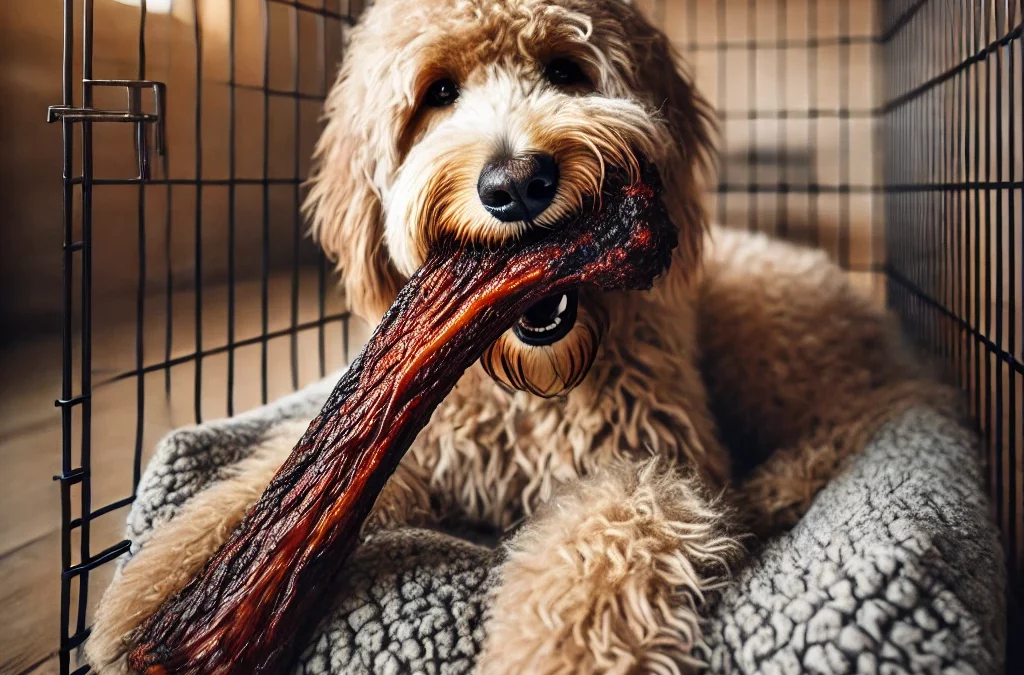
Especially in the case of puppies who are curious about the world and tend to bite everything they come across, kennel cage is a great solution. It protects against swallowing dangerous objects, prevents furniture damage and reduces the risk of injuries. I tell you many times before you pick up your puppy what “nasty creatures” these puppies are. Something is already “dawning” in their head but they do not yet fully know that human hands, feet, calves must be respected;) And especially those that belong to our children. So sometimes (especially in the evening) when the puppy is acting up and we have already used all possible ways of “talking to each other” kennel cage comes to the rescue. But be careful – it is not a punishment for him, simply a place where we will teach the puppy how to calm down. If we give him a tasty bone there, a chew toy, he will associate the cage with pleasure. What's more - it will dawn on him in his little head that it is precisely this chewing, biting and licking that gives him great pleasure (they secrete happiness hormones) and he will learn this practice of calming down his emotions. A connection will certainly be created in his little head on how to deal with excessive excitement and stress. Children also need protection from a little piranha 🙂
2. Help with learning cleanliness
Dogs instinctively avoid doing their business where they sleep. This kennel cage helps teach cleanliness, especially in young dogs. Just set appropriate times for walking the dog, and it will quickly understand that physiological needs should be done outside.
3. Support in combating separation anxiety
Many dogs suffer from separation anxiety, which manifests itself by destroying things, excessive barking, or howling when their owner is away. Kennel cage can become a place where the dog feels safe, even if it is left alone at home. The condition is to gradually accustom it to being there and of course to accustom it from puppyhood. In the case of the Australian Labradoodle, which is very focused on humans, this is particularly important. Why? Because even small puppies are eager to follow their owner wherever they go. Limiting the possibility of this tracking is very important. It teaches the puppy that it is also “ok” on its own. You don’t need an owner 24/7 to feel good and comfortable. In other words, the dog learns self-confidence. Even if it hears – the dog will never be alone. Believe me, there may be moments in life when it will be alone. And besides, by being with the dog 24/7, we are doing it a great disservice.
4. The perfect solution for when you're traveling
Traveling with a dog can be stressful for both the dog and the owner. Kennel cage ensures safe transport – both in a car and on a plane. A dog that is used to being in a cage will tolerate travel much better and adapt to new conditions faster. Of course, we do not transport dogs in kennel cage because it is not a device designed for this type of journey. Special cages for car journeys are used for this purpose. Nevertheless, the very fact of getting used to being in a closed cage will be very helpful here. In my practice, I observe one thing. Puppies travel with me in the car from the age of 5-6 weeks. I accustom them to travelling in this way. The first journey can be surprising - where am I, what is happening? But each subsequent one is problem-free. And now, I have received a phone call from my family a few times - my dog does not like to travel by car. It turned out that after introducing this safe space - a cage in the car, the problem was completely eliminated.
5. Help with raising a dog
Kennel cage helps teach self-control and calm behavior. Dogs that have a permanent resting place are less likely to get overexcited or react impulsively. In many cases, it also helps reduce stress-related aggression.
6. Facilitates recovery after illness or surgery
After surgery or injury, dogs often need restricted exercise to recover faster. Kennel cage provides controlled conditions, minimizing the risk of excessive activity and post-operative complications.
7. A moment of rest, his own place where he will feel safe

How to enter correctly kennel cage?
To kennel cage to fulfill its function, it must be properly implemented. Here are some key steps:
1. Gradual familiarization
You can't lock your dog in a cage for a few hours straight - it can cause stress and negative associations. It's best to leave the cage open and encourage your dog to enter it with treats, toys and a pleasant tone of voice. If the breeder has already used kennel a cage or a playpen, it will certainly be a little easier, although it is a new situation for the puppy - after all, it is in a strange house, without its mother and siblings.
2. Providing comfort
Cage It should be a comfortable place – you can put a soft blanket in it, put favorite toys and water in it. It is worth placing it in a quiet place where the dog will not be exposed to excessive stimuli. In the case of the Australian Labradoodle, it must be a place where the family often stays – because they like to “be part of it”
3. Not using the cage as a punishment
It is very important that the dog does not associate the crate with punishment. If it is only locked in negative situations, it will become afraid of it and will not want to go in it.
4. Gradual increase in time spent in the cage
Initially, you should confine your dog for short periods of time, gradually increasing the time. It can be helpful to give your dog treats or chews that will keep him busy and make being in the crate a positive experience.
5. Not letting your dog out when asked
If your dog starts barking or whining, it's a good idea to wait until he calms down before letting him out. This will teach him that calm behavior brings the desired results. Remember the 30 second rule!! If the puppy stops whining – we wait 30 seconds at least and then we can let him out of the kennel. Why? After this time, the puppy will no longer associate that he was let out because he was squeaking. There is no way to connect such facts 😉 However, a dog let out when he is squeaking – guarantees us that the next time he will scream louder and much longer. Then getting used to kennel cage will not last 1-2 weeks but months. The rule is - if the puppy squeaks, we do not touch him, do not approach him, do not talk to him, do not let him out of the cage. But attention - we are in the same room providing him with comfort - everything is okay. Only after letting the puppy out do we think about changing the strategy, correcting possible mistakes.

Common application errors kennel cages
Although kennel cage is a great educational tool, many people make mistakes that can lead to negative consequences. Here are the most common ones:
X Locking the dog up too quickly for a long time – This can cause stress and negative associations with the cage. X Using the Cage as a Punishment - The dog should not treat it as a place "for punishment", but as its safe space. X Lack of adequate comfort – Hard ground, lack of toys or water can make the dog not want to stay in the cage. X Letting Your Dog Out When He Whines – This can reinforce undesirable behavior and teach your dog that making noise brings results.

IMPORTANT!!
Kennel cage is not a solution for people who work 8 hours a day. It is only a help. This is a topic that I also discuss in depth with my clients. The puppy can stay in it for max 2 hours at a time. So if you do not have the possibility to use kennel cages due to limited space, in a limited time range choose another solution. There are larger "puppy kennels" available on the market, which are really a very good solution. In such a kennel, the puppy must be able to relieve itself, rest, have a place to play. For people who are at home cage is better than a playpen, because the puppies do not try to climb the walls of the playpen when they see the owner. We, on the other hand, often lean over the playpen to take the puppy out, the puppy then stands on its hind legs, putting weight on them - which in the long run can have a negative effect on its hip joints.
To sum up
Kennel cage, used in a conscious and responsible manner, brings numerous benefits to both the dog and its owner. It is helpful in teaching cleanliness, reducing separation anxiety, education and ensuring safety while traveling and at home. However, it is crucial to introduce it properly and avoid mistakes that may discourage the dog from using it. If we follow the rules of proper use kennel cage, it will become our pet's favorite place of rest and refuge in stressful situations.


